
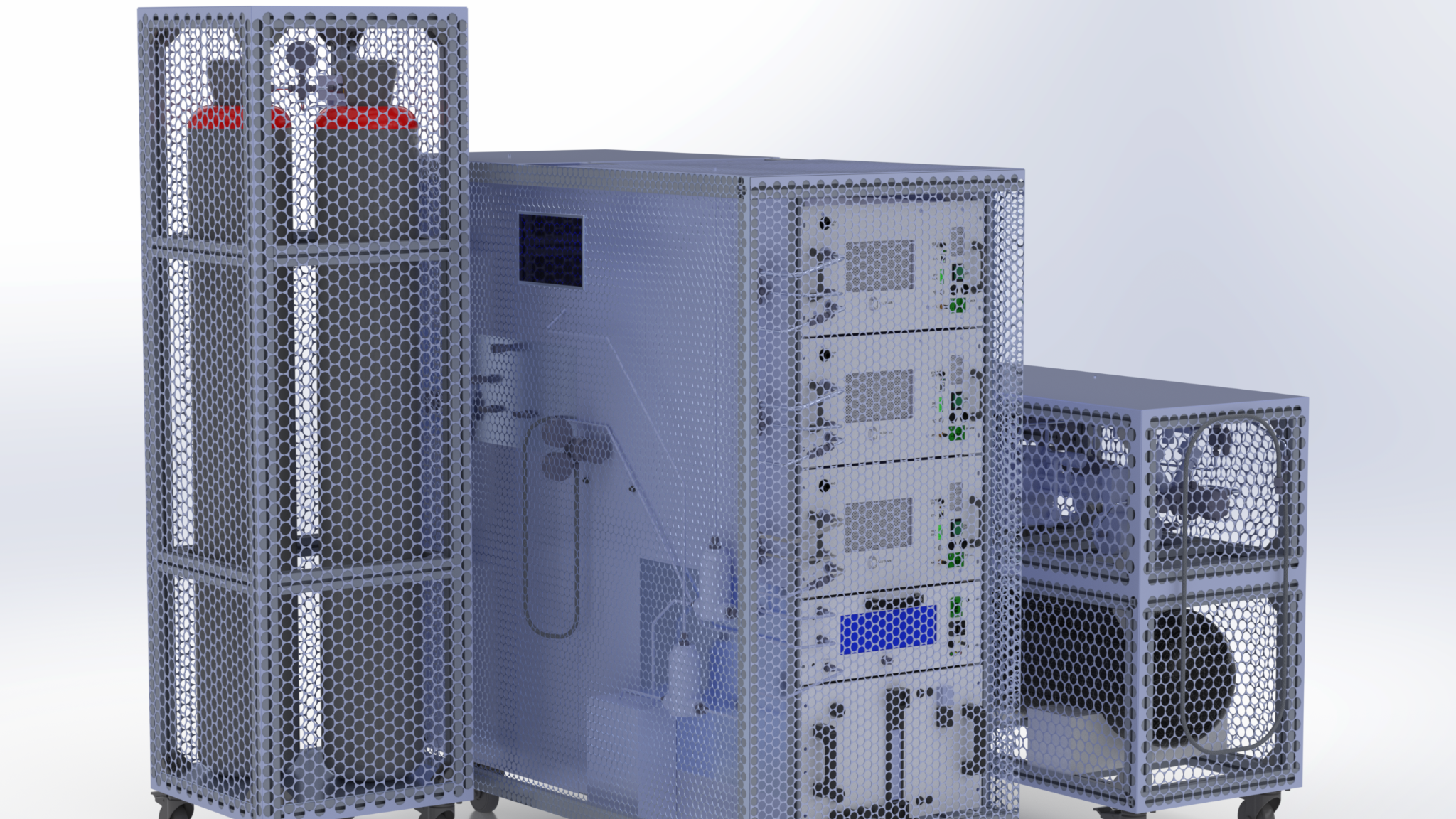
Development of the second iteration of HydroCharge is going excellent. Building on what we learned from our first prototype, we have redesigned the process system and restructured the solution around a modular layout.
The first iteration demonstrated the core functions of the system: producing hydrogen locally, compressing it and filling external cylinders. It also helped us identify where the design and operation could be improved. In the second iteration, we are focusing on automation, simplicity, modularity and safety.
Automating the Process
Operating the first prototype gave us practical experience with the system as a whole. Some process steps had to be carried out manually, which helped us understand how the system worked and where changes were needed.
For the second iteration, we have further engineered the process system to automate steps that previously required manual intervention. The new design builds on the findings and drawbacks identified during the first iteration, taking us a step closer to a simpler and more automated solution.
A Modular Design
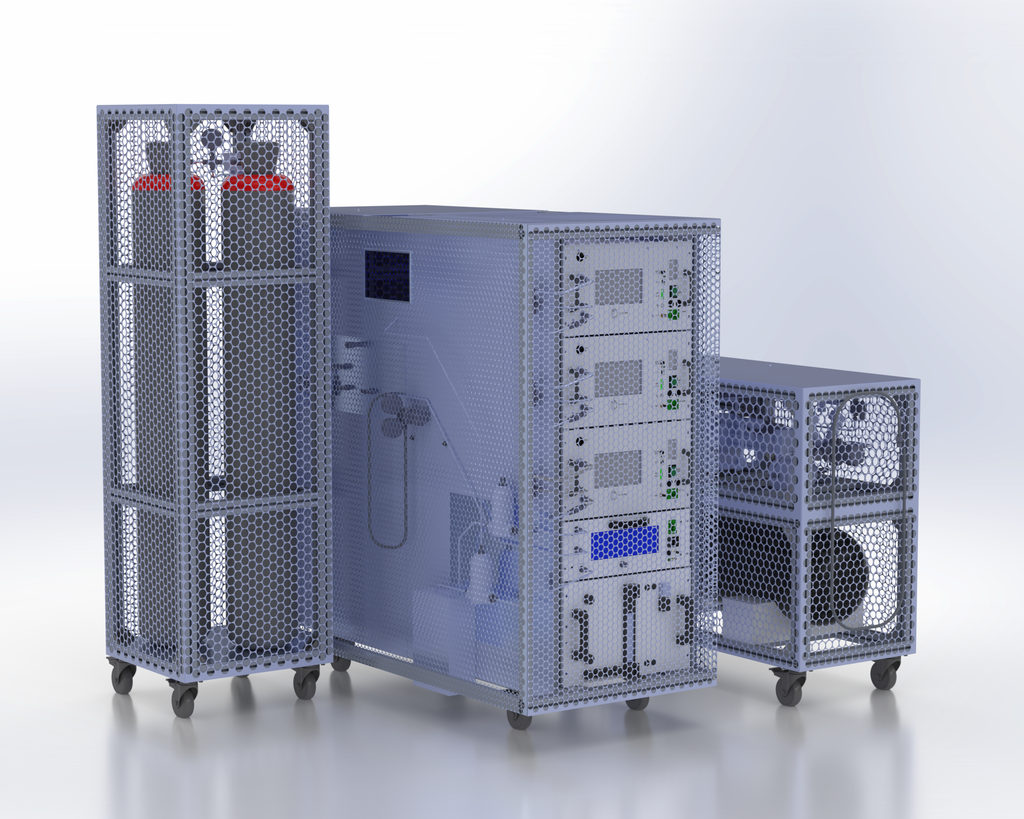
The second iteration uses a modular layout, giving us the opportunity to rethink how the system is structured. The new render shows the planned arrangement.
The smaller modules are easier to transport, and quick connections are intended to make deployment simpler. The modular approach also supports scalability: the system can be configured according to what is needed rather than requiring every application to use the same setup. This provides an opportunity to keep the solution more cost-effective for different use cases.
Simplicity is an important goal throughout the design. By reconsidering both the layout and the process, we aim to make the system easier to deploy and operate.
Safety
Safety remains a central part of HydroCharge’s development. Working with hydrogen requires careful consideration of the process equipment, electrical system and the environment in which the system will operate.
We are developing the second iteration with applicable regulations and standards in mind and preparing for the conformity assessment needed for CE marking. This work is ongoing alongside the engineering of the system.
Our new electrical system is also under development. Its design takes relevant standards and explosion protection requirements into account, including applicable ATEX requirements.
Increased Production and Storage
Alongside the redesigned process system, the second iteration will have a greater hydrogen production capacity. The new system is designed to produce three times as much hydrogen as the first prototype, allowing us to explore applications with a higher demand for locally produced hydrogen.
We are also adding an onboard water purification system. Integrating water purification into the solution is another step towards making the overall system simpler to deploy and use.
The new iteration will have increased hydrogen storage capacity. Together with the higher production capacity, this expands the capabilities of the system and provides more flexibility in how the produced hydrogen can be stored and used.
The solution is being designed for both indoor and outdoor use. This provides flexibility when considering different locations and applications, although each installation must be assessed against its specific conditions and applicable safety requirements.
What’s Next?
The second iteration brings together the lessons learned from our first prototype and the work needed to develop HydroCharge further. Through a more automated process and a modular design, we are working towards a hydrogen solution that is simpler to deploy and use while keeping safety at the centre of development.
We look forward to sharing more as the second iteration progresses.